September 02, 2026
Safe Battery Disposal for Businesses: Preventing Fires and Managing Battery Waste Responsibly
From powering smartphones to consumer electronics, batteries provide a convenient and reliable source of power. However, poorly maintained or damaged lithium batteries can ignite and may even explode. In fact, a survey by Material Focus found that batteries caused over 700 fires in 2022.
In particular, batteries that may end up in landfill or recycling centres that are not equipped for safe battery disposal are at risk of being crushed during the waste management or recycling process. If this happens, the battery can ignite and set fire to the surrounding flammable materials.
It’s also important to consider the environmental impact of improper battery waste disposal. Battery cells can release toxins that can leak into the environment and contaminate the soil and groundwater, while valuable materials that could be recovered through recycling are lost.
For organisations generating waste batteries, implementing safe handling and lithium battery disposal best practices in the UK is essential to protecting employees, reducing fire risk and supporting environmental responsibilities.
Business Responsibilities For Battery Recycling And Disposal
Businesses have a responsibility to ensure batteries are managed safely throughout their lifecycle and are not disposed of in general waste or mixed recycling streams. Whether batteries come from office equipment, handheld devices, mobile phones, laptops or other workplace electronics, they require separate collection and appropriate recycling.
A clear battery management process can help organisations:
Reduce the risk of workplace fires
Protect employees, contractors and waste management personnel
Support environmental and sustainability objectives
Improve compliance with waste management requirements
Ensure batteries are recycled through appropriate channels
Providing a dedicated battery recycling container within the workplace can help employees separate battery waste correctly and prevent batteries from entering general waste streams.
A Danger For Waste Management Fleets And Staff
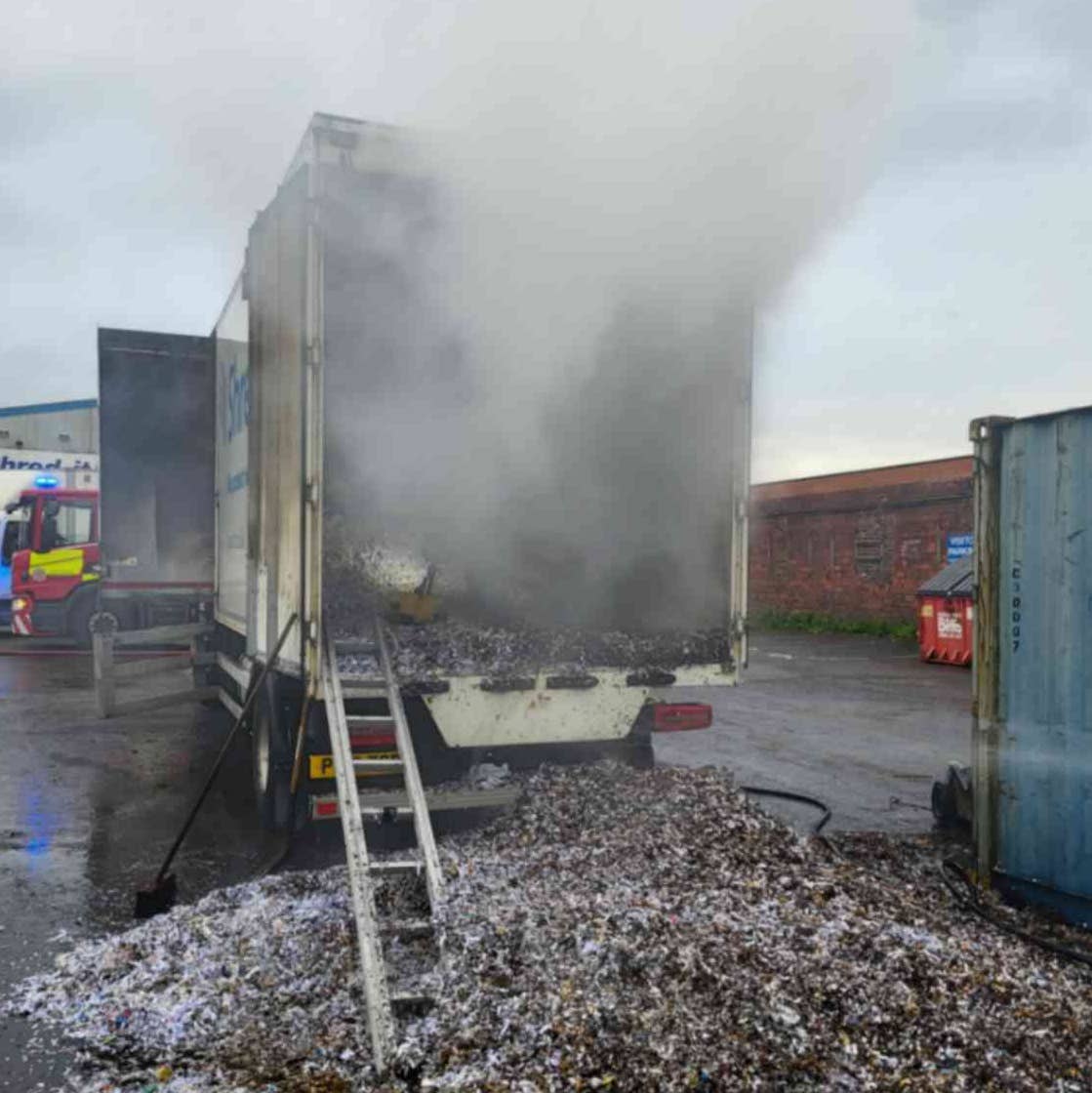
At Shred-it, we understand the risks that improper battery waste disposal can create. When batteries are mixed with the paper and other flammable materials we shred, whether that’s confidential paperwork, hard drives or other electronic devices, they can create a significant fire hazard.
This can represent a major problem for our fleet, and in turn, our customers, leading to potential delays in services. Most importantly, battery fires can pose a serious safety risk to our customer service representatives and team members in our shredding facilities.
Why Can Damaged Batteries Catch Fire?
Like any device that can create and store energy, lithium-ion batteries can cause a fire when they’re physically damaged or exposed to excessive heat. As the number of rechargeable devices used by businesses continues to grow, ensuring safe storage and compliant lithium battery disposal practices in the UK becomes increasingly important.
Battery fires can spread very rapidly, and are particularly difficult to extinguish because the lithium salts in the battery are self-oxidising. This means that they generate their own oxygen and can’t be suppressed like traditional fires.
But what causes the fire in the first place? When lithium-ion batteries are overheated, crushed, short circuit or have another malfunction, a reaction known as “thermal runaway” can occur. This is a chemical process within the battery that produces heat and flammable gases such as carbon monoxide, carbon dioxide and more. Because of the compact design of batteries, this process creates more heat than can be dispersed, leading to the ignition of the flammable gases.
Safe Storage And Disposal Of Lithium-Ion Batteries
Businesses should ensure employees understand how to identify, store and dispose of different battery types safely. Having a documented process for battery waste disposal can help reduce fire risks, improve recycling rates and support workplace compliance requirements.
It’s easy to prevent major damage and help keep operators safe – by practising correct safe battery disposal procedures.
Businesses should:
Store batteries in a designated battery recycling container
Keep batteries away from heat sources and flammable materials
Cover exposed terminals before storage
Separate damaged or swollen batteries from other battery waste
Ensure batteries are never placed in confidential waste or mixed recycling streams
The most important thing to remember is to never place batteries in mixed recycling, confidential waste containers or general waste bins. Instead, store them separately using a designated battery recycling container and arrange for collection through an appropriate recycling scheme.
Most retailers who sell batteries offer safe battery recycling points, and local recycling centres may also provide dedicated facilities for battery waste disposal.
Businesses should follow the storage and preparation instructions provided by their battery recycling scheme or waste provider. Employees should not attempt to charge, discharge, dismantle or modify a battery that appears damaged, swollen, leaking or unusually hot.
A Shred-it representative said:
"Many businesses underestimate the risks associated with improper battery disposal and the potential impact on employee safety, operations and waste management services. We encourage customers to keep batteries out of secure document containers and instead use a dedicated battery recycling container until they can be taken to an approved recycling point. It's a simple step that can significantly reduce fire risks."
These easy steps can help prevent physical damage to property and protect the safety of Shred-it customer service representatives and team members at our shredding facilities - as well as limiting the potential impact on local emergency services.
So when dealing with used batteries: think, don’t bin it.
For more information of what can and cannot be shredded and recycled with Shred-it, visit our resource centre.