December 03, 2025
Are Paper Shredders Worth It? The Ultimate Guide
Did you know the first paper shredder was patented in 1909 by Abbot Augustus Low in New York? It was designed to help offices destroy sensitive documents, yet more than a century later the same question still lingers: are paper shredders really worth it?
On the surface they seem like a simple solution. Feed in a few sheets and the job is done. But the reality is less secure and for businesses it can be both costly and risky.
In this guide we look at what paper shredders actually do, explore their hidden costs and environmental impact, and reveal how businesses can protect information the right way.
But first, let’s take a look at what exactly a paper shredder is.
What Is a Paper Shredder?
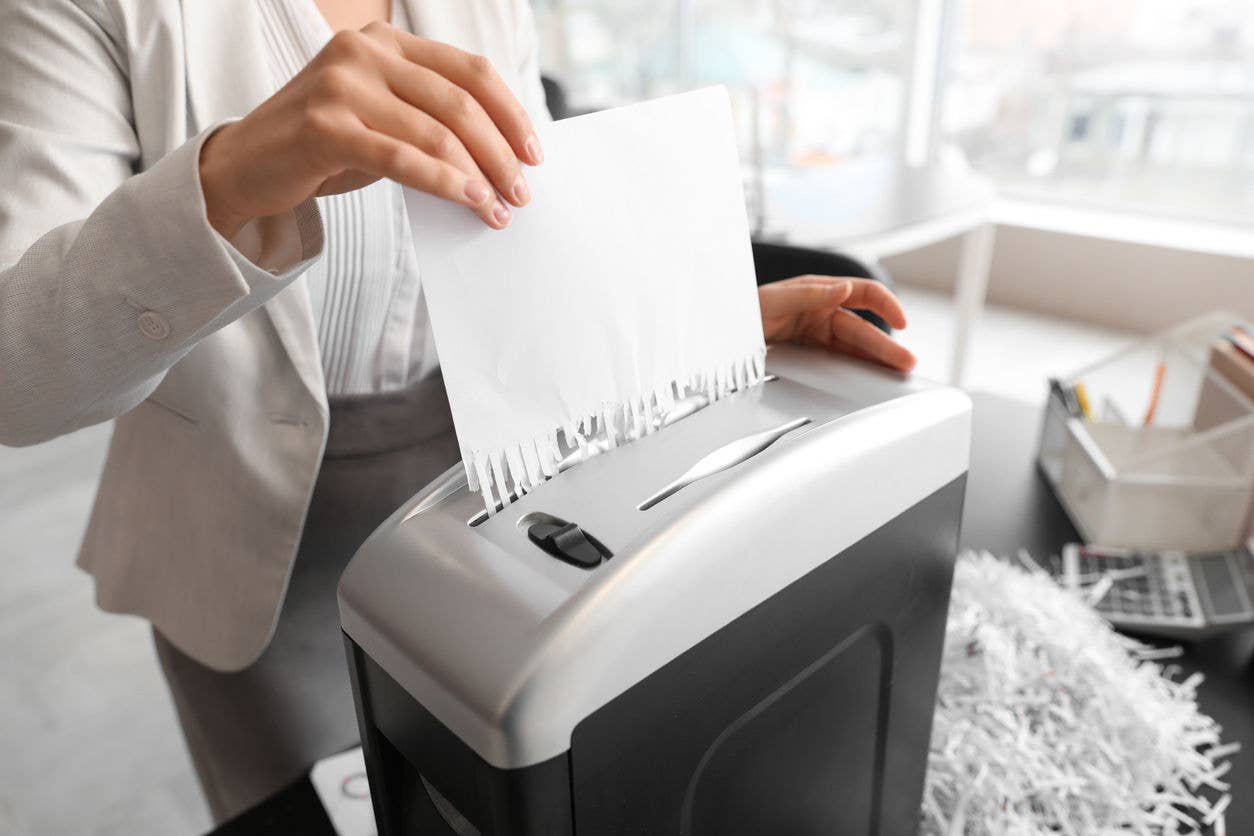
A paper shredder is a machine designed to cut documents into strips or small particles, making them harder to read. Many people buy them for home offices or workplaces to dispose of sensitive information.
There are several common types of shredders:
Strip-cut shredders – the most basic type, cutting paper into long vertical strips. They’re fast but offer the least security since strips can be pieced back together.
Cross-cut shredders – cut paper both vertically and horizontally into smaller fragments, making reconstruction more difficult.
Micro-cut shredders – produce confetti-like particles, often marketed as the most secure option, though still not foolproof.
For more detail on shredder types, see our article on cross-cut shredders and why they matter.
While shredders are marketed as a simple solution for document disposal, the reality is that they come with limitations in terms of security, efficiency, and compliance. That’s why it’s important to look beyond the machine itself and ask: are they really worth it?
Are Paper Shredders Worth It?
On the surface, paper shredders seem like a convenient and low-cost way to protect your information. You buy a machine, plug it in, and dispose of sensitive documents whenever you need. For many homes and small offices, this feels like an easy solution.
But when you look a little deeper, the question of whether they’re really worth it starts to shift. Shredders are notorious for:
Frequent jams and breakdowns – especially when used for more than a handful of sheets at a time.
Limited capacity – most models can’t handle high volumes, staples, or thicker materials without damage.
Ongoing maintenance – oiling blades, emptying bins, and replacing machines when they burn out.
False sense of security – shredded strips or fragments can often be pieced back together.
💡 Fun fact: In 2019, Shred-it teamed up with partners in San Diego to set a Guinness World Record for the most waste paper shredded in eight hours, a staggering 108,435.79 kg (239,060 lbs) [Guinness World Records]. This highlights the sheer scale required to deal with large volumes securely, far beyond what any office shredder could manage.
The time, cost, and risk involved in using a personal or office shredder add up quickly. What initially seems like a small investment can become a bigger burden, and one that doesn’t always guarantee compliance or protection.
This is why many individuals and businesses turn to professional shredding services like Shred-it, which remove the hassle entirely and provide guaranteed secure destruction.
The Hidden Costs of Paper Shredders
What looks like a simple, low-cost purchase often ends up draining far more resources than expected.
Here are the main hidden costs that come with owning a shredder:
1. Time Spent Shredding
Most shredders can only handle a few sheets at a time. For households this is an inconvenience, but for businesses it means staff spend hours feeding stacks of documents in small batches. That’s time that could be spent on more valuable tasks.
2. Maintenance and Repairs
Shredders need regular oiling, cleaning, and blade care to stay functional. Even with good maintenance, breakdowns are common. From overheating motors to paper jams that render the machine useless. Repairs are costly, and downtime leads to sensitive documents piling up.
3. Frequent Replacements
Entry-level shredders aren’t designed for heavy workloads. Under constant use, they wear out quickly, forcing businesses to replace them every couple of years. What seems like a one-time expense often turns into a recurring cost cycle.
4. Rising Energy Bills
While the electricity demand of one shredder may seem minor, regular use across offices adds up. Larger shredders in particular consume significant energy, adding another layer of hidden cost.
5. Waste Disposal Hassle
Shredded paper creates its own disposal problem. Bins fill up quickly, need frequent emptying, and can’t always be recycled through local council schemes. That means extra work for staff and, in some cases, higher waste disposal fees.
👉 For more risks to consider, see our blog on 5 paper shredder risks you should know.
Security Risks With DIY Shredding
Not all shredders pose the same level of risk, but none provide complete peace of mind. Here’s how the risks stack up:
🔴 High Risk – Reconstructable Documents
Strip-cut shredders produce strips that can often be pieced back together. Even cross-cut models still leave fragments large enough for determined fraudsters to reconstruct sensitive data.
🟠 Medium Risk – Compliance Concerns
For businesses, GDPR and data protection laws require secure destruction. A faulty or overloaded shredder can mean confidential papers sit around or get discarded incorrectly, creating exposure to fines and reputational damage.
🟠 Medium Risk – Inconsistent Shredding Practices
Staff don’t always use shredders properly, or at all. Machines jam, bins overflow, or people skip the process entirely. This inconsistency makes sensitive documents more likely to end up in general waste.
🟢 Low Risk – Lack of Proof of Destruction
While less immediate, the absence of an audit trail is still a security concern. With DIY shredding, there’s no certificate to verify that information has been destroyed securely, something professional services like Shred-it provide as standard.
👉 For more on how professional services mitigate these risks, see our article on how safe paper shredding services really are.
How Businesses Can Shred Paper the Right Way
Shredding documents securely in a business setting requires more than an office shredder.
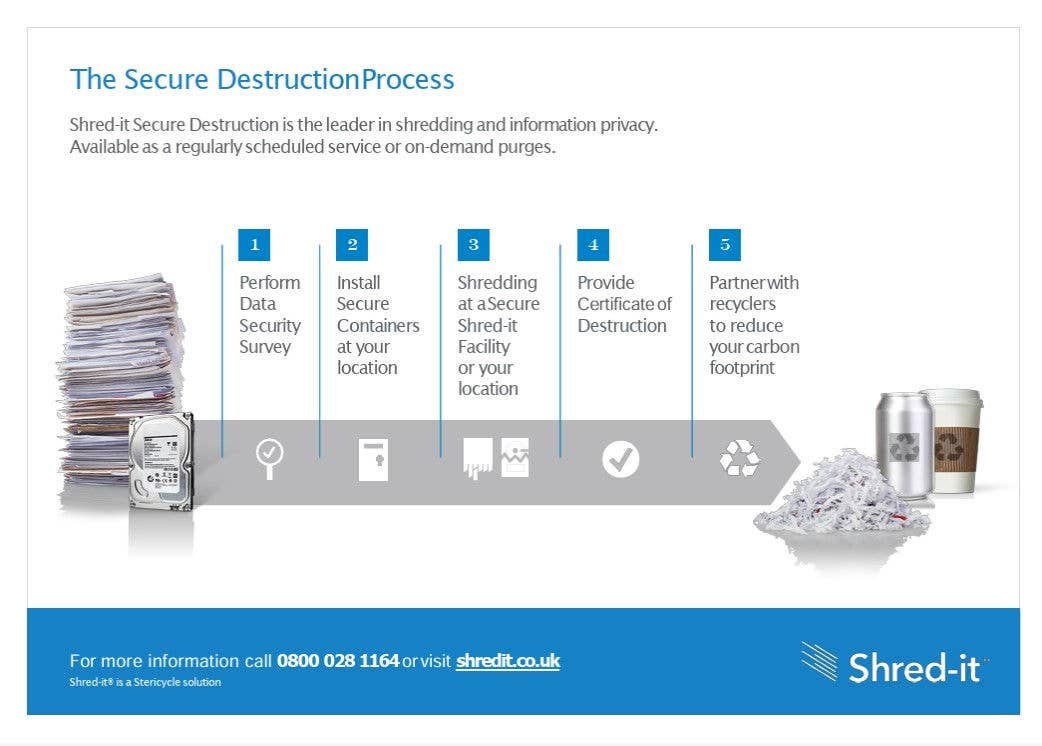
Here’s the right process to follow:
Step 1: Assess Your Needs
Begin with a data security survey to understand the types of documents your business handles and the risks involved.
Step 2: Install Secure Containers
Place locked consoles or bins around the workplace so confidential papers are stored safely until collection.
Step 3: Professional Shredding
Work with a secure shredding provider like Shred-it to have documents destroyed either on-site or transported to a certified facility.
Step 4: Certificate of Destruction
Receive official proof that documents have been permanently destroyed, providing peace of mind and compliance assurance.
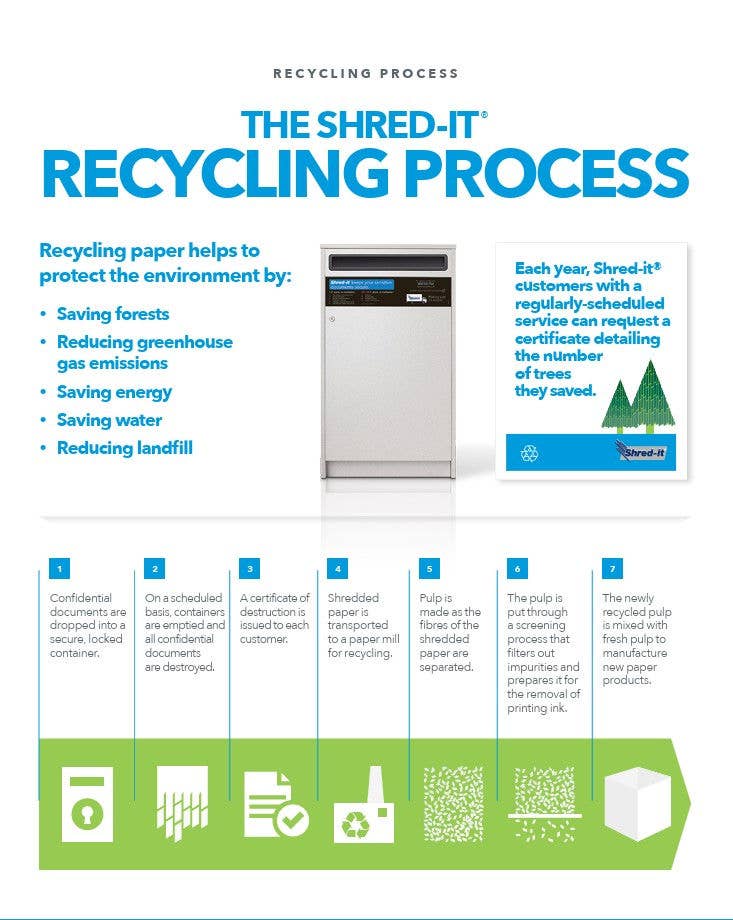
Step 5: Responsible Recycling
Ensure shredded paper is recycled through trusted partners to minimise environmental impact and reduce your carbon footprint.
This step-by-step approach gives businesses a reliable, compliant, and environmentally responsible way to handle sensitive paperwork:
How Environmentally Friendly Are Normal Shredders?
Shredding paper yourself may feel eco-conscious, but in reality, DIY shredding often hinders recycling and can inadvertently harm sustainability efforts. Here's why, and how professional shredding services offer a better solution:
Not all councils accept shredded paper
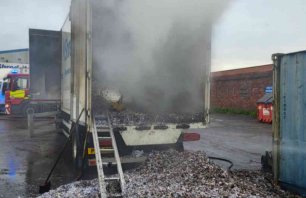
Many local authorities in the UK refuse to collect shredded paper for recycling because the short, light strips slip through sorting machinery and create fire hazards.
Shredded paper can clog or bypass recycling systems
Sorting facilities rely on large screens. Shreds often fall through or get caught in machinery, leading to more waste ending up in landfills or incinerators.
It uses valuable resources without delivering real recycling benefits
Recycling paper uses around 70% less energy and water than making new paper from virgin materials.
Producing recycled paper can save approximately 17 trees for every ton recycled, and significantly reduce landfill waste
DIY shredding misses key environmental benefits
Without proper processing, shredded paper rarely makes it back into the recycling stream. Meanwhile, professional shredding services ensure shredded materials are collected, baled, and sent to mills, closing the loop.
By contrast, professional shredding services like Shred-it handle paper responsibly: documents are destroyed securely and recycled properly through trusted partners. That means less waste, a lower carbon footprint, and real environmental impact.
Secure Paper Shredding Services for Businesses
For organisations, protecting sensitive information isn’t just best practice, it’s a legal requirement. Office shredders might feel like a convenient solution, but they come with high costs, wasted time, and significant compliance risks. The smarter, safer option is to use a professional shredding partner.
Here’s why businesses choose Shred-it:
✅ Guaranteed compliance – Every shred comes with a Certificate of Destruction, giving your business documented proof for audits and GDPR requirements.
⏱️ Time and cost savings – Employees spend zero time at the shredder, freeing them to focus on meaningful work.
🔒 Secure processes – From locked consoles in your workplace to secure transport and accredited destruction facilities, documents are protected every step of the way.
🌍 Environmental responsibility – All shredded paper is recycled through trusted partners, helping your business meet sustainability goals.
📈 Scalable services – Whether you need scheduled collections or a one-off bulk purge, Shred-it adapts to the size and demands of your business.
When it comes to safeguarding information, in-house shredders just don’t cut it. With Shred-it, your organisation gets a secure, compliant, and environmentally responsible solution that eliminates risk and saves resources.